
Category Crowding: 50 Data Tools, 15 Labels, and Two Categories Holding Half the Market
What does a buyer actually face when they open a directory of 50 data tools? Not 50 equal choices spread evenly across a tidy map, if these labels are any...
What does a buyer actually face when they open a directory of 50 data tools? Not 50 equal choices spread evenly across a tidy map, if these labels are any guide. They face a crowded centre, where two category labels alone account for half of every company listed, and a quiet edge, where some labels contain only one or two names. How should a buyer compare options where the shelf is packed, and how should a company present itself where the shelf is nearly empty? Both start with one measurement: how companies distribute across directory labels. This article takes one audited set of 50 profiles, counts its 15 category labels, and reads the shape of that distribution without inflating it into a claim about any market beyond the set itself.
What Category Crowding means
Category Crowding is how the companies in a directory distribute across category labels: a few crowded labels where buyers comparison-shop, and a long tail of near-empty labels where a listing stands alone. The concept describes a distribution, not a ranking of quality. A crowded label tells a buyer that many vendors claim the same job, so the real work is discrimination: telling apart companies that share a label by examining verified specifics. A near-empty label tells a different story. There, a listing gains visibility simply by existing in a small set, and the buyer's work is deciding whether the label genuinely fits their problem, since there are few neighbours to triangulate against. Crowding also exposes how a directory thinks. Labels are editorial choices, and the distribution a buyer sees is partly a map of the underlying work and partly a map of labelling decisions. The counts are real counts of a real set, and the labels they count are human-made containers whose boundaries shape the result.
The numbers
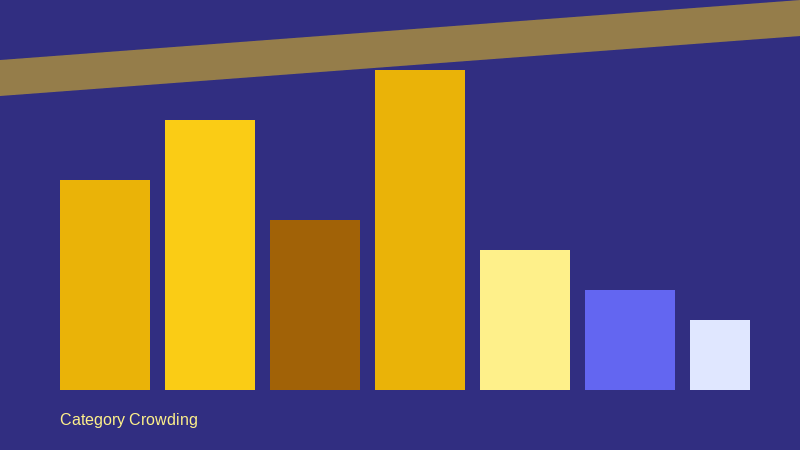
The dataset contains 50 companies distributed across 15 distinct category labels (Source: SmartDataAI listings dataset, week 01, checked 2026-11-11; category statistics computed 2026-11-23). The largest label is B2B data enrichment, with 15 companies, or 30 percent of the set (Source: SmartDataAI listings dataset, week 01, checked 2026-11-11; category statistics computed 2026-11-23). The second largest is email verification, with 10 companies, or 20 percent (Source: SmartDataAI listings dataset, week 01, checked 2026-11-11; category statistics computed 2026-11-23). Together, the top two labels hold 25 of the 50 companies, exactly half of the directory (Source: SmartDataAI listings dataset, week 01, checked 2026-11-11; category statistics computed 2026-11-23).
The email theme runs deeper than a single label. Email-related labels taken together, namely email verification plus email verification SaaS, email list cleaning, email validation and data quality, email verification with CRM services, and email verification with data enrichment, also total 15 companies (Source: SmartDataAI listings dataset, week 01, checked 2026-11-11; category statistics computed 2026-11-23). That figure shows how labelling granularity changes the picture. Viewed label by label, email verification is one category of 10. Viewed by theme, email-related work is a bloc of 15, level with the largest single label. Together the two views warn that category counts depend on how finely labels are cut, and any comparison between directories must first ask whether their labels are cut the same way.
Below the top two, the distribution thins quickly. B2B contact data holds 6 companies (Source: SmartDataAI listings dataset, week 01, checked 2026-11-11; category statistics computed 2026-11-23). CRM data quality holds 4 companies, and B2B data services also holds 4 companies (Source: SmartDataAI listings dataset, week 01, checked 2026-11-11; category statistics computed 2026-11-23). The remaining 9 labels hold only 1 to 2 companies each (Source: SmartDataAI listings dataset, week 01, checked 2026-11-11; category statistics computed 2026-11-23).
One further check concerns duplicates. All 50 companies carry a deduplication flag of none, meaning no duplicate listings were marked in the set (Source: SmartDataAI listings dataset, week 01, checked 2026-11-11; category statistics computed 2026-11-23). That matters because inflated counts are the first suspicion whenever one label looks dominant. Here, the 15 companies under B2B data enrichment are 15 separately listed companies, as far as the dataset's own flags record.
The interpretation splits by position. In crowded labels, the differentiator buyers need is verified specifics. When 15 companies share one label and 10 share another, the label stops discriminating, and the decision moves to documented facts: what each profile can evidence, how complete it is, and how precisely its offer is stated. In tail labels, a complete profile is visible simply because there is nothing next to it. A company that is one of one, or one of two, needs to be findable, correctly labelled, and complete enough that a buyer with few alternatives can still verify it. For the directory, the tail deserves periodic review: a single-company label may signal an emerging niche, a labelling mistake, or a company placed too narrowly.
Questions, answered
How concentrated is this directory, in one figure?
The top two labels hold 25 of 50 companies, exactly half the set (Source: SmartDataAI listings dataset, week 01, checked 2026-11-11; category statistics computed 2026-11-23). B2B data enrichment contributes 15 and email verification 10. The other half is spread across the remaining 13 labels, which is why the centre feels crowded and the edges sparse.
Does the email theme dominate more than the label counts suggest?
By theme, it matches the largest label. Email-related labels taken together total 15 companies, the same count as B2B data enrichment on its own (Source: SmartDataAI listings dataset, week 01, checked 2026-11-11; category statistics computed 2026-11-23). The difference is fragmentation: the email companies are divided among six related labels, while enrichment sits under one. Granularity, not just demand, decides which theme looks biggest.
Could duplicate listings explain the crowding?
Not according to the dataset's own checks. All 50 companies carry a deduplication flag of none, so no duplicate listings were marked in the set (Source: SmartDataAI listings dataset, week 01, checked 2026-11-11; category statistics computed 2026-11-23). The remaining 9 labels holding only 1 to 2 companies each also argue against inflation: a padded set would be unlikely to leave so much label space nearly empty.
Summary
This directory of 50 companies uses 15 category labels, and its top two labels, B2B data enrichment with 15 companies and email verification with 10, hold exactly half the set (Source: SmartDataAI listings dataset, week 01, checked 2026-11-11; category statistics computed 2026-11-23). Email-related labels combined also reach 15, while the remaining 9 labels hold only 1 to 2 companies each. Category Crowding shows buyers where comparison will be hard and where a listing stands alone. In the crowded centre, verified specifics decide. In the tail, completeness and correct labelling do the work.
Sources
- SmartDataAI listings dataset, week 01: 50 data-tool company profiles checked 2026-11-11; category statistics computed 2026-11-23.
- Label counts and deduplication flags from the same dataset and computation date.